Leadership Transition Coaching
A focused four-week coaching sprint for women navigating Director and VP roles who want to stop second-guessing themselves and start trusting their judgment again.
You didn’t suddenly lose your edge - the role changed.
You stepped into the next level - new scope, more visibility, higher stakes. You expected it to feel hard, just not like this.
You’re 30-60-90 days in, and the doubt is already there:
“Did I make the right move?”
→ Your confidence rises and falls with feedback or how others respond
→ Emails, messages, and decisions take more time and emotional energy than they should
→ You soften language, over-contextualize, or over-prepare to avoid being misread
→ You pick up the slack and prevent fires, and still feel like it’s not enough
→ Ambiguity makes you freeze or spiral instead of trusting your judgment
→ You hold it together all day, then crash once you’re home
Common Leadership Transition Challenges
On the surface, you’re doing everything “right.”
Taking on more than is yours to carry: overfunctioning.
Refining, smoothing, preparing for every possible scenario: perfectionism.
Making it easier for everyone around you, at your own expense: people-pleasing.
And all of this is hiding so well under "competent and responsible" that nobody — including you — has named it yet.
You're early in the role, and credibility still feels fragile but these strategies are also why leadership feels harder than expected.
You don’t want a different job.
You want to feel different in the one you already have.
But there's no training manual for how to operate at this level.
What We’ll Build Together
In four weeks, we:
Clarify what this role actually requires — no more filling every gap, no more proving through volume. You prioritize what matters.
Untangle your identity from your job description — feedback and visibility stop shaking your footing.
Redefine what “being good” means at this level — over-delivering to feel safe isn’t driving your decisions anymore.
Strengthen your decision-making — no more buffering. No more over-preparing every move.
Learn to communicate with precision — clear, direct, influential. Without cushioning every message.
Build steadiness you can rely on — even when expectations shift.
Why confidence drops after a promotion
But what’s happening is simpler.
You’re operating at a new level with tools designed for the last one.
Before, being “good” meant being helpful, thorough and responsive.
Now it means discernment, prioritization, and speaking with precision instead of permission.
That’s a different skill set — not a different personality.
This often gets labeled as anxiety. Imposter syndrome. A confidence wobble.
The Recalibration Process
Four weeks. Structured progression. Each week builds on the last.
We move in sequence — because each shift makes the next one possible.
Clarity first. Then identity. Then judgment. Then steadiness.
Week 1
Understand What’s Changed
Goal: Stop wondering what's wrong with you.
Together, we'll identify what actually changed when you stepped into your current role and why strategies that made you successful earlier in your career may no longer produce the same results.
You'll leave understanding:
Why confidence often drops after a promotion
Which success strategies are helping vs. hurting you
What your Director or VP role actually requires now
The difference between a capability gap and a transition gap
Week 2
Separate Capability from Self-Doubt
Goal: Learn what deserves your attention—and what doesn't.
We'll untangle perfectionism, imposter syndrome, and overthinking so you can respond to challenges more strategically.
You'll practice:
Catching self-critical stories before they spiral
Distinguishing real development areas from fear
Responding to uncertainty with curiosity instead of self-judgment
Building confidence based on evidence instead of feelings
Week 3
Learn to Trust Your Judgement Before You Feel Certain
Goal: Stop waiting to feel confident before taking action.
You'll begin experimenting with new leadership behaviors in your real work environment.
Examples include:
Speaking up earlier in meetings
Making decisions with less overthinking
Setting boundaries without guilt
Reducing overpreparing and overexplaining
Week 4
Build a Leadership You Can Sustain
Goal: Build a leadership approach that feels authentic, effective, and sustainable.
We'll consolidate what you've learned into a practical leadership approach that feels authentic, effective, and sustainable.
You'll leave with:
A clearer understanding of your strengths as a leader
Strategies that fit your personality—not someone else's version of executive presence
Tools to navigate future leadership transitions with more confidence
A personalized plan for continuing your growth after coaching ends. New habits don’t stick without integration.
What Changes
“I understand what’s actually expected of me now.”
“I trust my judgment again.”
“I don’t spiral as much after feedback or uncertainty.”
“Communication feels clearer and less loaded.”
“I know how to adjust when things feel off instead of panicking.”
That’s the win. Stability, clarity, and self-trust.
By the end of the four weeks, clients say:
This isn’t about proving you belong.
It's about leading at the level you've already earned.

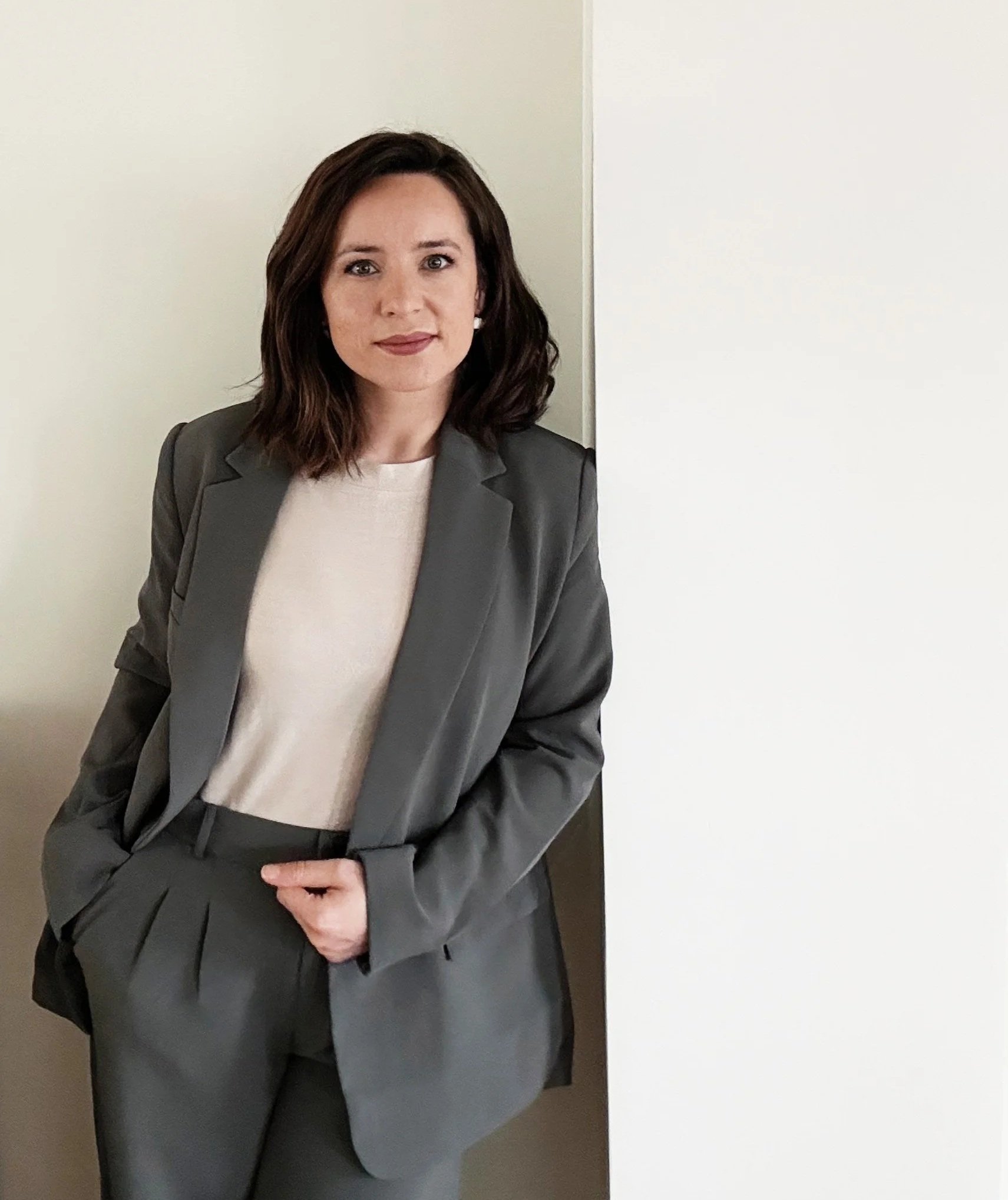
Hi, I’m Austėja
I’m an ICF-certified executive coach with 1400+ hours supporting capable women through role transitions and leadership inflection points.
I work at the operating level — not the motivational level.
Most of my clients are perceptive, conscientious leaders who carry more than they need to — and are ready to recalibrate how they show up.
I don’t help people “be more confident.”
I help them understand what’s actually happening — and respond from clarity and judgment.
This is likely a fit if:
You’ve recently stepped into a new role, expanded scope, or higher level of responsibility.
You’re capable and thoughtful — but more internally taxed than you expected to be.
You want to rise to the challenge — not quietly question whether you should be here.
You’re willing to examine how you’re operating, not just what you’re producing.
This may not be a fit if:
You’re looking for tactical leadership training or productivity systems.
You want scripts without context.
You’re not currently navigating a role shift, scope expansion, or inflection point.
Program Details
Format: Four 50-minute private sessions
Cadence: Weekly
Between sessions: Light email support for reflection or questions
Pre-work: A brief orientation so we use our time well
Application: Real-time — the work happens in your actual role
Investment: $997
Client Feedback
“My role feels significantly more manageable now.”
When I started, I felt like I was on a marketing island - managing expectations from all sides, with an avalanche of things that wouldn’t get done. It honestly felt like a path to burnout.
This process was incredibly clarifying. It helped me see how much I was over-rotating and over-performing instead of standing my ground and expecting more from others.
The biggest shift has been learning to communicate more directly and move from that ‘corporate survival’ mode into a more confident, authoritative voice. My role feels significantly more manageable now.
-Megan | VP Marketing, Series A Startup
Where to Begin
A focused conversation to determine whether this work is the right next step.
We’ll look at what’s changed, where things feel heavier or less clear than before, and whether recalibration support would be useful right now.
No preparation required — just bring what’s present.
If it’s a fit, we’ll outline next steps.
If it’s not, you’ll still leave with more clarity than you came in with.